Retro Lab: A Font That Feels Like a Creative Playground
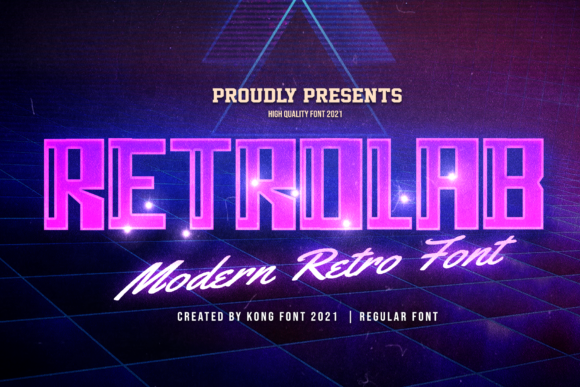
You know that feeling when a project needs a spark of personality—something that doesn't just sit there looking pretty but actually talks to your audience? That's the sweet spot Retro Lab occupies. Created by Kong Font Studio, this modern display typeface walks a fascinating line between nostalgic charm and contemporary energy. It's not trying to be everything to everyone, and that's exactly what makes it worth a closer look for designers, crafters, and anyone building visual identities.
What immediately stands out about Retro Lab is its playful confidence. The letterforms carry a rounded, approachable quality that recalls mid-century signage and vintage product packaging, yet they feel distinctly modern in their proportions and consistency. There's no awkward kerning to wrestle with, no inconsistent stroke weights that make you second-guess your layout. The characters sit well together, which matters more than most people realize when you're juggling headlines, subheadlines, and body copy across a single project.
Where This Typeface Really Shines
Let's talk practical applications, because that's where a font either earns its place on your hard drive or collects digital dust. Retro Lab works exceptionally well for branding projects that need warmth without sacrificing professionalism. Think of a boutique coffee roaster, a handmade soap company, or an independent bookstore—businesses where the visual identity needs to feel inviting and authentic rather than corporate and sterile.
For logo design, the display font's character set gives you enough versatility to experiment with different compositions. The slightly condensed letterforms mean you can stack words without the design feeling cramped, and the rounded terminals soften what might otherwise feel like a rigid layout. Paired with a clean sans serif for supporting text, you get a visual hierarchy that feels intentional and polished.
Packaging design is another area where this typeface pulls its weight. When you're designing labels, boxes, or product tags, legibility at various sizes becomes critical. Retro Lab maintains its personality whether it's printed large on a shipping box or scaled down on a jar label. That consistency across sizes is something you don't appreciate until you've worked with a font that falls apart at smaller dimensions.
Social media managers and content creators will find it useful for Instagram graphics, Pinterest pins, and YouTube thumbnails where you have roughly two seconds to grab someone's attention. The font's visual weight and distinctive character make it pop in crowded feeds without resorting to aggressive styling or excessive effects. It does the work on its own merits.
Building Visual Consistency Across Touchpoints
One of the most underrated aspects of choosing the right typeface is how it affects your brand recognition over time. When your website headers, email newsletters, printed materials, and social posts all share the same typographic DNA, your audience starts recognizing you before they even read the words. Retro Lab offers that kind of distinctive voice—a personality that's recognizable without being so eccentric that it limits your creative range.
Consider a small business owner designing marketing assets. You need a font that works on a website hero banner, a printed flyer, a business card, and a t-shirt mockup. The commercial licensing from Kong Font Studio covers these scenarios, which removes the guesswork around usage rights. That practical consideration often gets overlooked in the excitement of finding a font that looks great on screen.
For editorial layouts and blog design, Retro Lab pairs beautifully with neutral serif fonts for body copy. Use it for pull quotes, section headers, and featured article titles to create visual rhythm that guides readers through your content. The key is restraint—display fonts like this one work best when they have room to breathe rather than competing with dense paragraphs of text.
Practical Tips for Getting the Most Out of Display Typography
Here's some advice that applies to Retro Lab and any creative font you bring into your workflow:
- Test font pairings before committing. Drop Retro Lab into an existing design alongside your current body font. Does it complement or clash? A five-minute pairing test saves hours of revision later.
- Mind your readability context. This is a display typeface, meaning it's built for headlines and short bursts of text—not for setting an entire paragraph. Use it strategically where impact matters most.
- Review all included styles and weights. Many premium fonts come with alternates, ligatures, or stylistic variations that unlock additional creative possibilities. Spend time exploring the full character map.
- Consider your audience's expectations. A playful, modern typography choice works brilliantly for lifestyle brands and creative businesses but might feel out of place for a law firm or financial advisor. Match the font personality to the emotional tone your audience expects.
- Check commercial licensing carefully. Whether you're selling digital products, printing merchandise, or designing for clients, make sure the license covers your specific use case. Kong Font Studio provides licensing details on their Creative Fabrica page.
Invitations, Merchandise, and Beyond
Crafters and hobbyists will appreciate how well Retro Lab translates to print-and-cut projects in Silhouette Design Studio. Wedding invitations, party banners, custom stickers, and personalized gifts all benefit from a typeface that feels handcrafted without being illegible. The compatibility with design tools like Photoshop and Silhouette means you can move between digital mockups and physical production without font rendering issues derailing your timeline.
For merchandise design—think tote bags, mugs, and apparel—the font's bold, rounded forms reproduce well across different printing methods, from screen printing to sublimation. There's a reason vintage-inspired typography dominates the custom merchandise space: it carries emotional weight that generic sans serifs simply can't match.
Ultimately, choosing a typeface like Retro Lab comes down to whether it serves your project's goals. Does it communicate the right mood? Does it work at the sizes you need? Does it play well with your other design assets? If your work leans toward the creative, the personal, or the artisanal, this modern display font from Kong Font Studio deserves a spot in your toolkit. It won't solve every typographic challenge you face, but for the ones it fits, it fits remarkably well.